
Everything You Need to Know About Flatbed Trailers
Highlights
- Flatbed trailers are versatile, easy to load, and ideal for oversized or irregular cargo.
- A flatbed trailer is a flat, open trailer without sides or a roof.
- Standard flatbed trailers can carry up to 48,000 pounds, depending on their design and size.
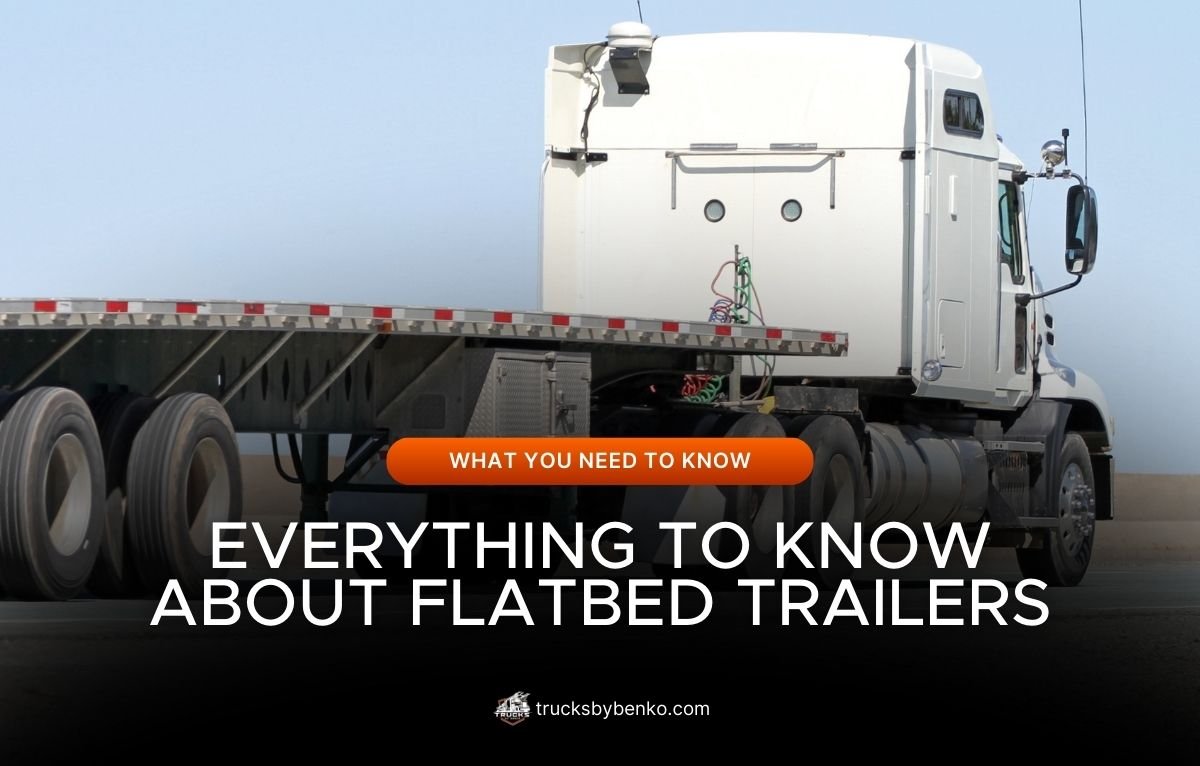
Buying a flatbed trailer is a great way to make your business more efficient and profitable. But with so many options out there, how do you pick the right one?
Flatbed trailers are important for moving big, heavy, or odd-shaped items, especially in industries like construction and farming.
To choose the best trailer, you must know its size, weight limits, and features. This article explains everything you need to know clearly and simply.
By the end, you’ll feel confident about picking the right flatbed trailer for your needs.
Why Choose a Flatbed Trailer?
Flatbed trailers are designed for versatility, making them ideal for transporting a wide variety of goods. Unlike enclosed trailers, they offer open sides and a flat surface, allowing easy loading and unloading of items that don’t fit inside a box trailer.
Benefits of Flat Bed Trailers:
Ease of Loading: Equipment and cargo can be loaded from any angle, making operations more efficient and saving time during loading and unloading.
Compatibility: Suitable for oversized, wide, or irregularly shaped loads that might not fit into standard enclosed trailers.
Durability: Built with heavy-duty materials to handle the wear and tear of transporting large and heavy items safely.
What is the Load Capacity of a Flatbed Trailer?
The load capacity of a flatbed trailer depends on its size and design. Most standard flatbed trailers can carry up to 48,000 pounds (21,772 kilograms). It’s important to evenly distribute the weight to keep the trailer balanced and safe while driving.
Factors Affecting Load Capacity:
- Axle Strength: The type and number of axles determine the maximum weight the trailer can bear, with heavier loads needing stronger axles.
- Material Build: Steel trailers often have a higher weight capacity than aluminum ones, though aluminum trailers are lighter and more fuel-efficient.
- Load Distribution: Properly balancing cargo ensures that no part of the trailer is overloaded, reducing wear and tear on axles.
What Size Trailers Are Flatbed?
Flatbed trailers come in different sizes to suit various transport needs. Standard lengths are great for handling typical freight like pallets and equipment.
Stretch flatbeds are perfect for extra-long items like beams or wind turbine parts.
Standard dimensions include:
Type | Length (ft) | Width (ft) | Height (ft) |
Standard Flat Bed | 48-53 | 8.5 | 5 |
Stretch Flat Bed | 60-80 | 8.5 | 5 |
What is the Maximum Size of a Flatbed?
The maximum size of a standard flatbed trailer in North America is typically 53 feet long, 8.5 feet wide, and 5 feet high. These dimensions are standard for most transport needs and comply with legal road regulations.
Flatbed trailers this size can carry large and heavy cargo, making them ideal for industries like construction and manufacturing.
If your load exceeds these dimensions, you may need special permits for oversized transport.
Oversized cargo often requires additional safety measures, like escort vehicles and warning signs, to ensure it complies with road safety rules.
Always check local and provincial regulations to avoid fines or delays during transport.
What is the Size of a Flat Bed in Meters?
In the United States, a standard flatbed trailer measures 14.6 to 16.2 meters long, 2.6 meters wide, and 1.5 meters high.
These dimensions are ideal for carrying large, heavy, or irregularly shaped cargo while meeting U.S. road regulations.
Flatbed trailers of this size are widely used in industries like construction, farming, and logistics.
What is the Longest Legal Flatbed Trailer?
The longest legal flatbed trailer is 53 feet (16.2 meters). Beyond this, operators must obtain oversized load permits.
Points to Consider for Long Trailers:
- Road Restrictions: Some routes have limitations on trailer length due to narrow turns or weight limits.
- Turning Radius: Longer trailers require more room to maneuver safely, especially in urban areas.
- Safety Precautions: Use flaggers and signs when hauling oversized loads to ensure safety for other road users.
How to Find the Center of a Flatbed Trailer
Finding the center of a flatbed trailer is essential for safe and balanced loading. Follow these steps:
- Measure Length: Determine the total length of the trailer bed to establish an accurate reference point.
- Divide by Two: Split the total length to identify the midpoint for balance and stability during transport.
- Mark the Center: Use chalk or tape for a visible marker, ensuring easy reference during loading.
Conclusion
Flatbed trailers offer unmatched versatility and reliability for transporting goods in various industries.
Whether you’re hauling construction materials, machinery, or oversized items, understanding their dimensions and load capacities is essential for safe and efficient operations.
At Trucks by BenKo, we provide a wide range of high-quality flatbed trailers, along with detailed condition reports and flexible financing options to meet your needs.
Contact us today to explore your options and find the perfect flatbed trailer for your business.